Netflix Documentary Revisits Aileen Wuornos With New Material
By Taylor Bennett. Sep 20, 2026
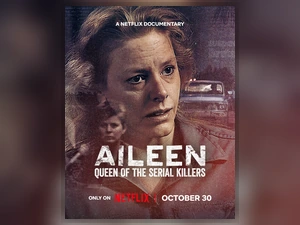
Promotional image for Netflix’s Aileen: Queen of the Serial Killers. Credit: Netflix
Netflix Returns to a Case That Has Been Retold for Decades
Netflix’s Aileen: Queen of the Serial Killers revisits the life and crimes of Aileen Wuornos through archival footage, interviews and material from Wuornos herself. The documentary originally premiered in 2025 and has returned to Netflix’s promotional cycle as the platform connects it with its newer Lizzie Borden programming.
Wuornos killed seven men in Florida between 1989 and 1990. She was convicted in six murder cases and was executed in 2002.
Those court outcomes are the fixed factual foundation. The documentary’s purpose is not to undo them, but to revisit how Wuornos’s life and crimes have been understood and portrayed.
The Film’s Distinctive Material Comes From the Archive
Director Emily Turner uses prison interviews, archival reporting and audio from people who knew Wuornos. Netflix says the documentary includes rare material and previously unseen death-row interviews.
That gives the film something different from a dramatized retelling. Viewers hear Wuornos’s own words and see reporting created closer to the time of the case.
Archival access does not make every statement in an interview independently true, but it allows viewers to see how Wuornos described herself and how journalists and people around her responded while the case was still active.
The Case Has Been Reframed Many Times
Wuornos has been the subject of books, documentaries and the 2003 film Monster, which brought Charlize Theron an Academy Award. Each retelling has emphasized different parts of the same history.
Some focus on the killings and trial record. Others spend more time on Wuornos’s childhood, her relationships, her claims of self-defense or the public fascination with a female serial killer.
The Netflix documentary enters that long history by asking why the case remains difficult to reduce to a single explanation even though the legal outcomes are settled.
New Context Is Not a New Verdict
That separation is important for viewers of true-crime documentaries. A filmmaker can introduce overlooked footage, personal history or a different interpretation without changing what a court decided.
Wuornos’s convictions and execution remain part of the public record. The film’s new contribution is perspective: archival material that may change how viewers understand her life and the media environment around the case.
That is why the story continues to return to the screen. The facts of what Wuornos did have long been established, but the cultural argument over how to understand her has never really ended.
References: Netflix Tudum - Aileen Wuornos True Story Revealed in Documentary | Netflix Tudum - How the Aileen Documentary Ending Invites a Reconsideration

The Truth In Facts team was assisted by generative AI technology in creating this content
Trending