After 14 Years, a Jury Weighs the Evidence in Faith Hedgepeth's Killing
By Alex Morgan. Oct 25, 2026
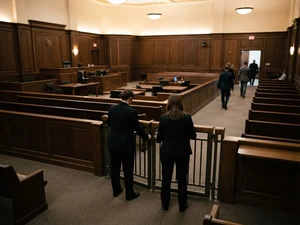
Faith Hedgepeth’s family waited nearly nine years for an arrest in her killing. Fourteen years after her death, a jury is now weighing the case against the man accused of killing the 19-year-old college student.
Closing arguments finished October 22 in Durham, North Carolina, and ABC11 reported that deliberations had begun. Miguel Salguero Olivares has pleaded not guilty to charges including first-degree murder, rape, sexual offense and burglary.
Hedgepeth was a 19-year-old University of North Carolina at Chapel Hill sophomore when she was found dead September 7, 2012. Her roommate discovered her after returning to their off-campus apartment.
From a Night Out to a Long Investigation
The roommate testified about returning from a club with Hedgepeth early that morning, then leaving the apartment again after arranging a ride. Hedgepeth remained behind, according to that testimony.
Investigators collected physical evidence at the apartment. But nearly nine years passed before police announced an arrest in September 2021.
Prosecutors say a DNA sample obtained after Salguero Olivares was stopped in a separate impaired-driving matter matched evidence from the killing. The arrest brought a named defendant into a case that had remained unresolved for years.
The prosecution rested October 19 after nine days of testimony from 23 witnesses, according to ABC11.
The Evidence Presented to Jurors
The state called crime-lab specialists, law enforcement officers and people who knew Hedgepeth. Prosecutors argued that DNA and print evidence linked Salguero Olivares to the apartment and the killing.
The case included testing of bottles and other items recovered at the scene. Prosecutors also discussed a note written on a fast-food bag.
A crime-lab witness described strong statistical support for some DNA comparisons while acknowledging that she could not give absolute certainty about a sample’s origin, according to Associated Press coverage. The defense questioned the reliability and significance of parts of the evidence.
The Defense Challenged the Timeline
In closing arguments, defense lawyers accused investigators of focusing too narrowly on Salguero Olivares. They argued that the presence of DNA did not establish when it had been deposited or prove the state’s account of the killing.
They raised an alternative explanation involving an earlier consensual encounter. That was a defense argument, not an established finding about Hedgepeth or her relationship with the defendant.
The defense also questioned why some bedding had not been tested, challenged the handling of potential evidence and pointed to inconsistencies it said existed in the timeline. WRAL reported that the lawyers emphasized the prosecution’s obligation to prove its charges.
Prosecutors answered that criticism by arguing the defense’s questions did not erase the physical evidence. They urged jurors to consider the forensic results together rather than treating investigative shortcomings as an explanation for all of them.
Salguero Olivares did not testify, and the defense called no witnesses before resting October 21. He remains presumed innocent, and prosecutors bear the burden of proving the charges beyond a reasonable doubt.
References: Live updates: Jury in Faith Hedgepeth murder trial begin deliberations | ‘Tunnel vision’: Defense’s closing argument in UNC student murder trial | Closing arguments underway in trial of man accused of killing UNC student in 2012

The Truth In Facts team was assisted by generative AI technology in creating this content
Trending