Drug Warning Resurfaces After Pike Survives Execution
By Taylor Bennett. Oct 4, 2026
Drug Warning Resurfaces After Pike Survives Execution
Questions about the source and handling of Tennessee’s lethal-injection drug have returned to the center of the death-penalty debate after Christa Pike survived an execution attempt that was supposed to end her life.
Pike, 50, remained alive after Tennessee officials administered pentobarbital during the Sept. 30 procedure at Riverbend Maximum Security Institution in Nashville. She was later taken to a hospital in critical condition, and Gov. Bill Lee halted the state’s remaining 2026 executions while ordering an independent review.
Lawyers Had Raised Questions About the Drug
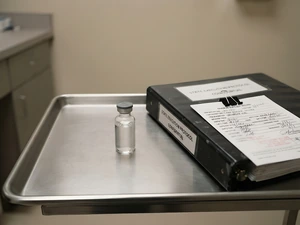
More than a year before Pike’s execution, attorneys representing Tennessee death-row prisoners had challenged the state over where it obtained pentobarbital. According to People, the lawyers argued that known manufacturers restrict the drug from being sold for executions and warned that Tennessee may have turned to a less transparent supply chain sometimes described as a gray market.
Tennessee has said the pentobarbital it uses is commercially manufactured, but state secrecy laws shield the identity of the supplier. That means the public and defense attorneys cannot independently verify where the drug came from, how it was stored or whether the state purchased it directly from a manufacturer.
The Tennessee Department of Correction has maintained that its execution protocol was followed. The failed procedure, however, has intensified scrutiny of a system that was already the subject of litigation over drug sourcing, testing and medical safeguards.
The Execution Did Not Go as Planned
Associated Press reporters who witnessed the execution described a prolonged process in which Pike remained conscious after the drug was administered. Witnesses said she complained about pain in her arm and later continued breathing after the curtain to the witness room had been closed.
Pike’s attorneys said the state made multiple attempts to establish intravenous access and that she had a medical condition they had warned could complicate the procedure. The state has not publicly identified a single cause for the execution failure.
The execution had already been delayed for hours by last-minute court proceedings. The U.S. Supreme Court ultimately allowed it to move forward, and the state began the procedure later that day.
Tennessee Orders an Outside Review
Lee called the failed execution deeply troubling and directed the Department of Correction to cooperate with a third-party review. The governor also postponed the state’s next scheduled execution while investigators examine what happened.
The review is expected to examine the execution process, including how the drug was obtained, prepared and administered. It also comes after Tennessee previously paused executions in 2022 because of problems with its lethal-injection procedures.
Pike was sentenced to death for the 1995 murder of 19-year-old Colleen Slemmer. She was 18 at the time of the crime. Slemmer’s family has continued to support carrying out the sentence and was present for the failed execution.
A New Legal Fight Begins
Pike’s lawyers are now arguing that the state should not be permitted to attempt another execution after what she endured. They have asked for her sentence to be commuted and say the failed procedure raises new constitutional questions.
Tennessee officials have not announced when or whether they will seek another execution date. For now, the state’s capital-punishment system is paused while an outside review examines a procedure that ended with the condemned prisoner alive, hospitalized and the state facing renewed questions about a drug source lawyers had challenged long before the execution began.
Review Extends Beyond One Execution
The inquiry also comes after another Tennessee execution attempt earlier in 2026 was stopped because officials could not establish intravenous access. That history means the outside review will be examining more than a single unexpected medical outcome. It will have to consider whether the state’s current procedures can be carried out consistently and whether the safeguards built into the protocol are adequate when problems develop.
The state has not said that the pentobarbital itself caused Pike to survive. Questions about the drug source are one part of a wider investigation that may also consider intravenous access, Pike’s medical condition, timing and administration. Until that review is complete, the exact reason the execution failed remains unresolved.
References: Christa Pike Death Row: Attorneys Warned Tennessee May Get Drug From Gray Market | Associated Press | Associated Press

The Truth In Facts team was assisted by generative AI technology in creating this content
Trending