What the Black Box Data Showed in the Case Behind Netflix's The Crash
By Taylor Bennett. Aug 4, 2026
Netflix’s The Crash revisits the disputed question at the center of Mackenzie Shirilla’s defense: whether she intentionally caused the collision that killed two young men in Strongsville, Ohio. An Ohio judge closed that question in August 2023 - and Mackenzie Shirilla’s attorneys are still trying to reopen it.
Dominic Russo Was 20. Davion Flanagan Was 19.
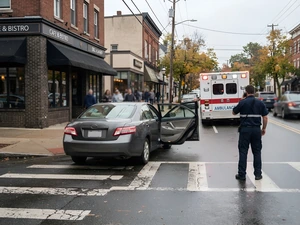
They were passengers in Shirilla’s Toyota Camry in the early hours of July 31, 2022, making their way through Strongsville, a suburb southwest of Cleveland. Russo was Shirilla’s boyfriend. The two had known each other as teenagers, and prosecutors described the relationship as controlling and volatile. In the weeks before the crash, Shirilla had made violent and threatening statements toward Russo, according to messages prosecutors introduced at trial. All three had marijuana in their systems that morning. Psilocybin mushrooms and a digital scale were found on Shirilla at the scene.
What the Documentary Centers On
The Crash, which Netflix describes as its most-watched nonfiction feature during the first half of 2026 with 65.2 million views, follows Shirilla’s family, the victims’ families, and Shirilla herself in what the film presents as her first prison interview. The documentary focuses on who Shirilla was before the crash, what the people around her and Russo believed about the relationship, and whether a 17-year-old could have intended what prosecutors said she did. The film frames those questions as unresolved and invites viewers to sit with the uncertainty.
What it does not place at the center is the vehicle and surveillance evidence that figured prominently in Judge Russo’s findings.
What the Car’s Data Recorder Showed
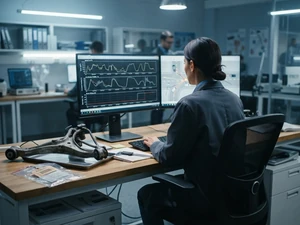
Among the prosecution’s key evidence was data recovered from the Toyota’s event data recorder - the device that captures vehicle performance in the seconds before a crash, similar to an airplane’s black box. Prosecutors argued that the data showed the accelerator at or near full application and no recorded brake use before the Camry struck a commercial brick building at about 100 miles per hour. A surveillance camera nearby captured the moment the car accelerated.
The trial also included a crash reconstruction, physical evidence from the scene, and messages introduced to establish the nature of Shirilla’s relationship with Russo.
Cuyahoga County Judge Nancy Margaret Russo - no relation to the victim - presided over the bench trial that Shirilla had chosen over a jury. On August 14, 2023, Judge Russo found Shirilla guilty of four counts of murder, four counts of felonious assault, two counts of aggravated vehicular homicide, drug possession, and possessing criminal tools. Shirilla was sentenced to life in prison with the possibility of parole. She is currently incarcerated at the Ohio Reformatory for Women in Marysville.
Her State-Court Challenges Failed
Shirilla’s conviction was affirmed on direct appeal. She later filed a post-conviction petition, which was dismissed as time-barred after it arrived one day past the filing deadline - an error her attorneys attributed to a miscalculation involving the 2024 leap year. The Eighth District Court of Appeals affirmed that dismissal in March 2026. The Ohio Supreme Court declined to take the case.
The Netflix documentary was produced and released while those proceedings were still active. It does not address Judge Russo’s written findings on the physical evidence or the course of the appellate rulings.
A Federal Petition Filed Days After the Documentary Reached 65 Million Viewers
On July 28, 2026, Shirilla’s attorneys filed a federal habeas corpus petition in the Northern District of Ohio. The petition alleges, among other claims, that the transfer of her case from juvenile court to adult court was constitutionally improper, that the evidence at trial was legally insufficient to support a murder conviction, and that the defense was denied effective assistance of counsel. The federal court has not yet ruled on those claims.
Shirilla is expected to become eligible for parole in 2037 if the conviction stands. The federal petition does not erase the trial court’s findings or automatically reopen the case. Her convictions remain in effect unless the federal court grants relief.
Netflix’s documentary invites viewers to reconsider whether the crash was intentional. Ohio’s courts have so far answered that question against Shirilla. Her federal petition asks a narrower one: whether the legal process used to reach that answer complied with the Constitution.
References: Mackenzie Shirilla files federal habeas corpus petition | Ohio Supreme Court declines to review Shirilla appeal | Ohio Court of Appeals ruling 2026-Ohio-830

The Truth In Facts team was assisted by generative AI technology in creating this content
Trending